
Who Makes the Best and Most Reliable Cars in the World
- Alan
- 1 minute ago
- 8 min read
Ask ten car people who makes the best cars in the world, and you may get ten different answers. One person will say Toyota without blinking. Another will argue for Porsche. Someone else will point to Mercedes-Benz, Lexus, Honda, BMW, Ferrari, or even Tesla.
They are not all wrong. “Best” depends on what matters most: reliability, engineering, comfort, performance, value, safety, resale value, or pure desire.
Still, if the question is who is number one in the automotive world, one name is very hard to avoid: Toyota.
Toyota is the clearest number one car manufacturer overall
If “number one” means the automaker with the strongest all-around case, Toyota Motor Corporation is the safest answer.
Toyota has built its reputation on a rare mix of strengths:
Huge global sales
Strong reliability
Efficient manufacturing
Broad model range
High resale values
Conservative but proven engineering
Hybrid leadership
Long-term customer trust
Toyota is not always the most exciting brand. It does not always make the fastest cars, the most luxurious cabins, or the flashiest technology. That is part of the point. Toyota’s strength is consistency.
The company builds cars, trucks, SUVs, vans, hybrids, and luxury vehicles through Lexus that work well for millions of people in many countries. A Toyota Corolla, Camry, RAV4, Tacoma, Land Cruiser, Prius, or Lexus RX may serve different buyers, but they all reflect the same core idea: build a vehicle that lasts.
That is why Toyota often sits at or near the top of global sales rankings. Volkswagen Group has also been a giant for decades, and Hyundai Motor Group has become one of the strongest competitors in the world. General Motors, Ford, Honda, Stellantis, Mercedes-Benz Group, BMW Group, Tesla, and BYD all matter in major ways.
But if the question is simple, who is the number one manufacturer in the automotive world, Toyota has the most complete claim.
Why Toyota earns the top spot
Toyota’s success is not based on one lucky model. It comes from a system.
Toyota builds for the long term
Many automakers chase trends quickly. Toyota tends to move slower, test longer, and use proven parts across many models. That can make some Toyota vehicles feel less flashy when new, but it often pays off years later.
A car does not become great only on the test drive. It proves itself after 80,000 miles, 150,000 miles, and sometimes far beyond that. Toyota understands this better than almost anyone.
Toyota controls complexity
Modern cars are packed with electronics, sensors, screens, turbochargers, transmissions, batteries, and software. More complexity can mean more comfort and performance, but it can also mean more things to repair.
Toyota usually avoids adding complicated systems before they are ready. Its hybrids are a good example. The Prius made hybrid technology feel normal, not experimental. Toyota’s hybrid system became known for smooth operation, strong fuel economy, and long service life.
Toyota has global reach
Toyota sells vehicles across North America, Europe, Asia, Africa, Australia, and Latin America. A company that succeeds in so many conditions has to solve more than one kind of problem.
A vehicle may face snow, desert heat, poor roads, heavy traffic, long highway trips, or rural use. Toyota’s strongest models often handle all of that without drama.
Lexus proves Toyota can build luxury too
Lexus matters in this debate because it shows Toyota is not only a mainstream brand. Lexus vehicles often combine quiet cabins, smooth engines, careful assembly, and excellent long-term dependability.
Some luxury brands focus more on performance or technology. Lexus focuses on calm, comfort, and ownership peace. For many buyers, that is exactly what luxury should mean.
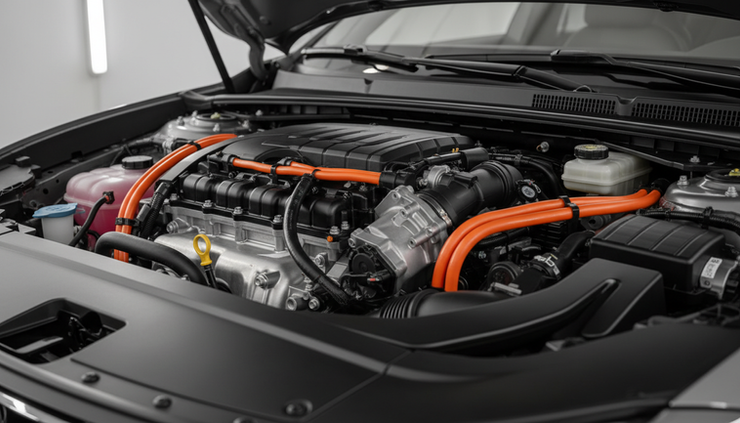
Who makes the best cars in the world?
The honest answer is that no single manufacturer makes the best car in every category. A brand that builds the best sports car may not build the best family SUV. A company known for luxury may not make the most affordable reliable sedan.
So the better question is: best at what?
Category | Strongest brands to consider | Why they stand out |
Best all-around ownership | Toyota, Lexus, Honda, Mazda | Reliability, resale value, low stress |
Best luxury comfort | Mercedes-Benz, Lexus, Rolls-Royce, BMW | Ride quality, quiet cabins, premium materials |
Best sports cars | Porsche, Ferrari, Chevrolet, BMW | Performance, steering feel, driver connection |
Best trucks | Ford, Toyota, Ram, Chevrolet, GMC | Towing, durability, work use, off-road trims |
Best electric vehicles | Tesla, BYD, Hyundai, Kia, Porsche | Range, charging, efficiency, EV engineering |
Best value | Toyota, Honda, Hyundai, Kia, Mazda | Features, warranty, fuel economy, price balance |
If one brand must be named as the best overall, Toyota still has the strongest case because it performs well in so many areas at once. But if the question is about emotional appeal, Porsche may have a better claim. If the question is ultra-luxury, Rolls-Royce is in a different world. If the question is electric vehicle scale, Tesla and BYD deserve serious attention.
The best cars in the world are not all built for the same purpose.
Porsche may make the best driver’s cars
Toyota is the top all-around manufacturer, but Porsche may be the best answer for people who care most about driving.
Porsche has a rare skill: it makes cars that feel special without becoming useless. The 911 is the famous example, but the Cayman, Boxster, Panamera, Macan, Cayenne, and Taycan all show the same thinking. Porsche blends performance, steering precision, braking feel, daily usability, and high build quality better than most brands.
A Ferrari may feel more dramatic. A Lamborghini may attract more attention. A BMW M car may offer more everyday value. But Porsche often wins because its cars feel complete. They can be thrilling on a back road and still easy to live with.
That is why many enthusiasts see Porsche as the gold standard for engineering feel.
Mercedes-Benz and BMW still define premium cars
Mercedes-Benz and BMW helped shape what people expect from premium vehicles.
Mercedes-Benz often stands for comfort, safety, interior design, and status. Its best sedans and SUVs deliver a quiet, refined feel that many brands try to copy. The S-Class has long been seen as a technology and luxury benchmark.
BMW built its name around sporty sedans and coupes. The best BMWs feel balanced, quick, and confident. The brand also makes strong SUVs and high-performance M models.
These brands do not always beat Lexus or Toyota for reliability. Repairs can be more expensive, and some models age better than others. But for buyers who want performance, prestige, and premium design, Mercedes-Benz and BMW remain central players.
Who makes the most reliable cars in the world?
For reliability, the answer becomes clearer. Toyota and Lexus are the most reliable car makers overall, with Honda and Mazda close behind.
Reliability is not about one perfect model. It is about patterns over time. Toyota and Lexus have earned trust because many of their vehicles run for years with basic maintenance. Engines, transmissions, hybrid systems, and interior parts often age well.
Honda also deserves major credit. The Civic, Accord, CR-V, and many Acura models have long been known for strong engines, practical design, and long service life. Honda vehicles can be fun to drive while still being sensible.
Mazda has improved a great deal and now builds some of the best mainstream cars for people who want reliability with a more premium feel. Mazda interiors, handling, and design often feel more expensive than the badge suggests.
Subaru can be very dependable too, especially for buyers who need all-wheel drive, though maintenance history matters. Hyundai and Kia have improved sharply in design, features, and warranty coverage, but long-term reliability can vary more by model and engine.

Why reliability is more than a badge
A reliable brand helps, but the badge alone does not guarantee a trouble-free car. A neglected Toyota can be worse than a well-maintained Ford, Honda, Mazda, or Chevrolet.
The most reliable cars usually share a few traits.
They use proven engines and transmissions
New technology can be exciting, but proven mechanical parts often last longer. Naturally aspirated engines, mature hybrid systems, and conventional automatic transmissions can age better than complex, untested setups.
That does not mean turbocharged engines or dual-clutch transmissions are bad. It means buyers should look at the track record of the exact model and powertrain.
They are maintained on time
Oil changes, coolant service, brake fluid, transmission service, tires, filters, and spark plugs matter. Many “unreliable” cars became that way because owners skipped basic care.
A car with detailed service records is usually a better bet than a newer car with no maintenance history.
They avoid unnecessary complexity
Air suspension, giant wheels, complex infotainment systems, high-output engines, and advanced driver aids can be nice. They can also raise repair costs as the vehicle ages.
The simplest version of a car is often the most dependable one.
They have good parts support
Popular models are easier to repair. Parts are available. Mechanics know the common issues. That is one reason cars like the Toyota Camry, Honda Accord, Toyota Corolla, Honda Civic, Mazda3, and Lexus RX have strong ownership reputations.
The best car brands by real-world need
The best answer changes when the problem changes.
Best for low-stress ownership
Toyota and Lexus lead here. Honda and Mazda are also excellent choices. These brands suit people who want a car to start every morning, hold value, and avoid surprise repairs.
Best examples often include:
Toyota Corolla
Toyota Camry
Toyota RAV4
Toyota Prius
Lexus ES
Lexus RX
Honda Civic
Honda Accord
Honda CR-V
Mazda3
Mazda CX-5
Best for luxury without too much risk
Lexus is the safest luxury choice for reliability. Mercedes-Benz and BMW offer more variety, more performance, and more prestige in some segments, but they usually cost more to maintain as they age.
Genesis has also become a serious premium brand, with strong design and comfort, though its long-term reputation is still developing compared with Lexus.
Best for performance
Porsche sits near the top. BMW M, Mercedes-AMG, Chevrolet Corvette, Ferrari, Lamborghini, and McLaren all make exciting cars. The right choice depends on budget and how extreme the car should feel.
For a sports car that can also be used often, Porsche is hard to beat.
Best for electric cars
Tesla changed the EV market with long range, quick acceleration, and a strong charging network in many regions. BYD has grown quickly and become a major force in electric and plug-in hybrid vehicles. Hyundai and Kia make some of the most compelling modern EVs, especially for design and charging speed. Porsche proves an EV can feel like a true performance car with the Taycan.
EV reliability is different from gas-car reliability. Battery health, software, charging hardware, and repair access matter more.
The top answer is different from the dream answer
There is a useful split between the best manufacturer and the most desirable manufacturer.
Toyota is the best all-around manufacturer because it serves the widest range of people with the fewest weak spots. It wins on trust. It wins on daily use. It wins on ownership cost. It sells enormous numbers of vehicles without losing its core reputation.
But the dream answer may be different.
A person who loves speed may pick Porsche or Ferrari. A person who values silence and status may pick Rolls-Royce or Mercedes-Benz. A person who wants electric technology may pick Tesla, BYD, Hyundai, or Kia. A person who wants rugged off-road strength may pick Toyota, Jeep, Ford, or Land Rover, depending on the exact model and use.
That is why the phrase “best car” causes so many arguments. People use the same words but mean different things.
The final verdict
If the question is who makes the best and most reliable cars in the world, the strongest overall answer is Toyota, with Lexus as its luxury arm.
Toyota is number one because it combines scale, quality, reliability, value, and global trust better than any other automaker. Lexus strengthens that case by adding luxury and refinement without giving up dependability.
For the most reliable cars, Toyota and Lexus lead, with Honda and Mazda close behind.
For the best driver’s cars, Porsche has the strongest claim.
For luxury, Mercedes-Benz, Lexus, BMW, and Rolls-Royce all deserve attention.
For electric vehicles, Tesla, BYD, Hyundai, Kia, and Porsche are key names.
The smartest answer is not one brand for every person. It is one brand for each need. Still, if one manufacturer must stand above the rest, Toyota remains the benchmark. It may not always build the flashiest car, but it has mastered the harder job: building cars that people trust for years.


Comments