
Will Your Vehicle Be Fully Controlled by AI in the Future?
- Alan
- Dec 9, 2025
- 3 min read
Imagine sitting in your car or truck, hands off the wheel, eyes off the road, while an AI system takes full control of your vehicle. This vision of the future is no longer confined to science fiction. Advances in artificial intelligence and automotive technology are rapidly changing how we think about driving. But will AI truly control your vehicle one day? And if so, what does that mean for safety, convenience, and the driving experience?
This post explores the current state of AI in vehicles, the challenges and benefits of fully autonomous driving, and what the future might hold for drivers and passengers alike.
How AI Is Already Changing Driving Today
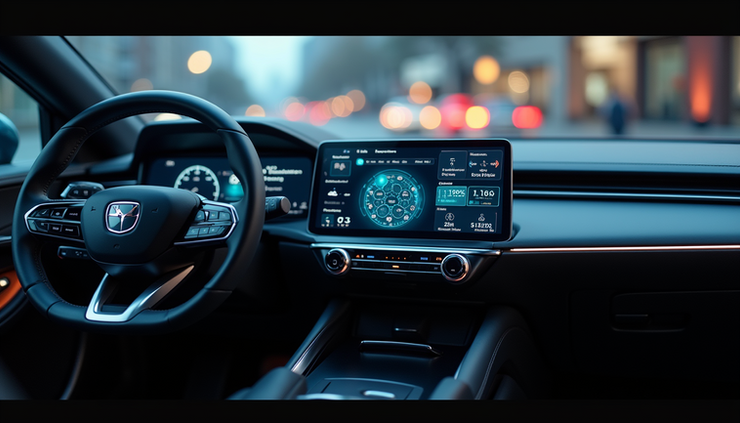
AI is no longer a futuristic concept in cars. Many vehicles on the road today include AI-powered features that assist drivers:
Adaptive cruise control adjusts speed based on traffic flow.
Lane-keeping assist helps keep the vehicle centered in its lane.
Automatic emergency braking detects obstacles and applies brakes to avoid collisions.
Parking assistance uses sensors and cameras to help drivers park safely.
These features rely on AI algorithms that process data from cameras, radar, and lidar sensors to make real-time decisions. While they do not fully control the vehicle, they reduce driver workload and improve safety.
For example, Tesla’s Autopilot and GM’s Super Cruise offer hands-free driving on highways under certain conditions. These systems demonstrate how AI can handle specific driving tasks, but they still require human supervision.
What Full AI Control Means for Vehicles
Full AI control means the vehicle can drive itself from start to finish without any human input. This includes navigating complex urban environments, obeying traffic laws, responding to emergencies, and making ethical decisions.
Achieving this level of autonomy requires solving several challenges:
Perception: The AI must accurately understand its surroundings, including other vehicles, pedestrians, road signs, and weather conditions.
Decision-making: The system must choose the safest and most efficient actions in real time.
Reliability: The AI must operate flawlessly under all conditions, including hardware or software failures.
Ethics and legal issues: The vehicle must handle moral dilemmas and comply with traffic laws worldwide.
Companies like Waymo, Cruise, and Baidu are testing fully autonomous vehicles in limited areas. These pilot programs show promise but also highlight the complexity of real-world driving.
Benefits of AI-Controlled Vehicles
If AI fully controls vehicles, the potential benefits are significant:
Improved safety: Human error causes over 90% of traffic accidents. AI can reduce crashes by reacting faster and avoiding risky behaviors.
Increased mobility: Self-driving cars can provide transportation for people who cannot drive, such as the elderly or disabled.
Reduced traffic congestion: AI can optimize routes and coordinate with other vehicles to improve traffic flow.
Lower emissions: Efficient driving patterns and electric autonomous vehicles can reduce pollution.
More productive time: Passengers can use travel time for work, rest, or entertainment instead of focusing on driving.
These advantages could transform transportation systems and urban planning.

Challenges and Concerns About AI Driving
Despite the benefits, several concerns remain about AI controlling vehicles:
Technical limitations: AI still struggles with unpredictable situations like construction zones, unusual weather, or erratic human drivers.
Cybersecurity risks: Autonomous vehicles are vulnerable to hacking, which could cause accidents or theft.
Job displacement: Professional drivers may face unemployment as AI takes over.
Ethical dilemmas: Programming AI to make life-and-death decisions raises difficult moral questions.
Legal and insurance issues: Determining liability in crashes involving AI vehicles is complex.
Public trust is another major hurdle. Many people remain skeptical about handing over full control to a machine.
What Drivers Can Expect in the Next Decade
The transition to fully AI-controlled vehicles will likely be gradual. Here’s what to expect:
More advanced driver-assist features that handle specific tasks.
Expanded use of autonomous shuttles and delivery vehicles in controlled environments.
Increased regulatory frameworks to ensure safety and privacy.
Integration of AI with smart city infrastructure for better traffic management.
Growing acceptance as AI systems prove their reliability.
Drivers may still need to take control in complex situations for years to come. The future could see a mix of human and AI driving depending on the context.

Final Thoughts on AI and Vehicle Control
The idea of AI fully controlling your vehicle is becoming more realistic every year. While there are challenges to overcome, the potential for safer, more efficient, and accessible transportation is clear. Whether you embrace this future or approach it with caution, AI will play a major role in shaping how we move.
Stay informed about new developments and consider how autonomous technology might fit into your life. The road ahead is exciting, and AI could soon be your trusted co-pilot or even your driver.


Comments